How To Address The Soft (But Often So Hard) Human Side Of Succession And Wealth Transitions.
Takeaways From Our UHNW Wealth Coherence Workshop 2025 For Wealth Advisors, UHNW Professionals, And UHNW Individuals In Zurich.
Engage In Robust Conversations
At very short notice, a select group of professionals from over seven countries joined The Family Office Roundtable by Benjamin Ulrich for an interactive workshop around Family Wealth Coherence.
The workshop was hosted by Emily Bouchard (www.emilybouchard.com), a leading pioneer in UHNW Family Dynamics.
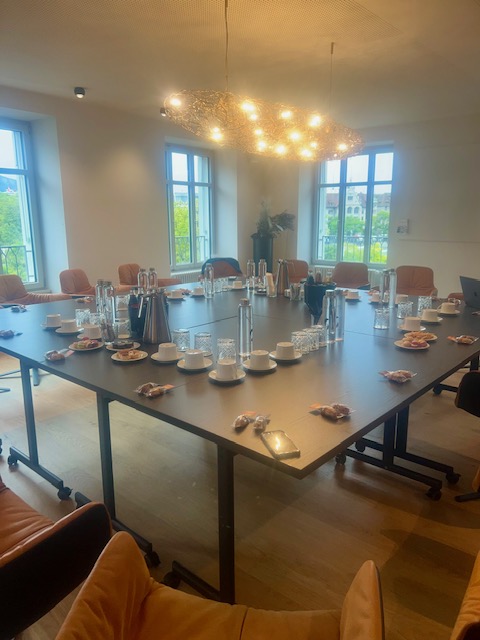
As you can see in the image below, we transformed the long I-shape form of the boardroom table into a square, with the intention that everyone could see each other.
Setting the tone was important. That everybody would come from a personal, authentic perspective and share from their daily practice. Nobody would pitch or sell anything.
Sharing ‘war stories’ from the trenches and asking questions about how others handled complex situations was a way for everyone to learn from one another.
Speak Your Intentions
Before we could start with the workshop, everybody was asked to contribute their intentions of what they wanted to learn in this workshop.
It was wonderful to see that at the end, we had ticked all the boxes.
The open format, with no presentations and no PowerPoint, and no agenda, allowed everyone to immediately jump into the roundtable format.
Naturally, several themes appeared that we will briefly highlight in this article.
Here are our main takeaways:
There May Be 20 Elephants In The Room
As in every family setting, each member has their own personal view.
We are including UHNW individuals without children in our post, but for them, a slightly different setup will be required, and different questions need to be asked.
Addressing the proverbial elephant in the room should maybe be viewed as addressing the 20 or so elephants in the room. Because everyone has at least their own view of what the elephant really looks like or what the elephant actually is.
An experienced facilitator can interview each family member at first.
This will allow the facilitator to moderate the family meetings around underlying tensions and defuse individual statements that may otherwise lead to emotional tensions or escalation, which again would prevent the family from having that constructive conversation.
Such processes may take years and involve regular meetings in different setups.
Upskilling Is Almost Always Necessary
Hardly any family or individual can solve the question about passing on their wealth by themselves. The more complex and dynamic the social network of the family or the individual is, the more skill is needed in learning to talk about how we should be talking to each other.
What we may call the Reverse-Onion Principle starts with a core and then adds several layers around that core.
It begins with the inheriting generation asking the giving generation about the beginning of their wealth story. The history is always the starting point of the conversation, and it should be embedded in the wider conversation about the purpose of the wealth.
Asking your father or mother to speak about the origin story, the trials and tribulations, the hardships and difficult decisions, but also about the rewards and the gratifying moments, can foster the bond and help the younger generation appreciate the perspective of their parents.
That conversation about purpose will almost certainly open up into a conversation about family values.
You may want to start discussing the values of the parents first. Understand what is important to them. Learn about their values. And then slowly chime in with your values and what you understand to be true about your family and its values.
From there, finally, you may guide the narrative into a conversation around innovation and change, bringing up questions around individual family members, their role and function, expectations, worries, fears, feelings of guilt and shame, etc.
It may not be easy for you in the beginning, because it will be a first time, and you may lack the skills necessary. But this can change. Learning how to talk can be very rewarding.
The 10×10 Learning Roadmap provided by the James Huges Foundation may be a great guide for you. It talks about 10 competencies across 10 life stages. It is a great framework for advisors and facilitators.
You can download a free ebook here.
These fundamental skills are important. Now you see why this process may take years, as different members of the family are going on their learning journey to acquire new skills.
I Am Not Mortal – Or Am I?
A conversation about inheritance is often unpleasant and might be avoided by the principal until it is too late, and a sudden accident or unexpected death awakens everyone to a new, often harsh reality.
Facing one’s own mortality can be a daunting challenge. Letting go of one’s company that became “my baby” can pose significant threats to our identity.
Therefore, planning around these emotions and learning how to have that emotional conversation is a noble challenge, and a family might gain a lot from confronting this task head-on rather than avoiding it until ‘life happens’.
Many war stories we heard that day have shown how conflicted generations can become, how siblings can become estranged from each other, and how children don’t talk to their parents anymore, and in cases this can even lead to death.
What If I Don’t Have Children?
Many UHNW Individuals don’t have children and therefore don’t have a natural inheritor of their wealth. The term Family Office or Family Governance or Family Succession therefore, is overlooking YOU – the wealthy individual without successors who may or may not want to pass on their legacy.
You may not even want to think about your own death and what happens to your wealth, your IP, and your assets.
But just because you didn’t have children doesn’t mean you should end your life’s work when you pass.
It may very well be the best idea to protect your legacy by ensuring it will be taken care of through a trust or a foundation.
By thinking about this in advance, you may plan for a future beyond your existence that ensures your legacy will continue and will be aligned with your values and your vision for the next generations.
Meeting In Person To Form A Braintrust
What was true for our workshop in Zurich under the guidance of the great Emily Bouchard (www.emilybouchard.com) is probably also true for your family gathering.
Through the collection of many astute questions, observations, and “war stories” from everyone, you can make this an uplifting and inspiring exercise about learning from the collective braintrust in the room that is your family.
If you can add vision to this mix and engage the younger generation, then you may avoid the pitfalls that so unnecessarily destroy so much value during transitions.
Learning with and from each other can be such a rewarding act. During longer retreats, the family can gather around fun activities in a nice setting and explore with their trusted facilitator the conversations that need to happen.
From great-grandparents to children as young as five, everyone can be involved on the learning journey around the family’s wealth coherence.
A Thing Or Two About Facilitating A Roundtable
If you are hosting such an event, you want everyone to come with an open heart and share from their lives in an authentic, genuine way.
I think it is best if you lead by example and set the tone this way. If you can create a space where not only ideas can flow, but real human connections emerge, you’ve done your job.
Sharing a personal upcoming challenge and showing your own vulnerability with the group is a courageous and deeply meaningful way to start any conversation – and if you are lucky, it may spark exactly the kind of dialogue you were hoping for: honest, insightful, and deeply engaged.
Remember to laugh and not to take yourself and everyone to seriously. This always helps.
If This Speaks To You And You Would Love To Learn More, Please Contact Us Or Connect With Us On LinkedIn.